
Sound Reduction for Homes with Hardwood Floors
May 19, 2025
While hardwood floors are timeless, and instantly boost the value of a home, there can be one downside. Sound waves bounce easier in rooms with hardwood floors, making sound reduction an issue. However, it doesn’t have to be! Sound reduction can be created in your home in different ways – both pre-installation and post-installation.
Pre-installation sound reduction
If you have the opportunity to isolate noise in your home before your hardwood floors are put down, definitely do so. One way to do this is installing an acoustical soundboard under the subfloor. By doing this, you can insulate sound vibrations.
Another way to implement sound reduction pre-installation is with underlayments, like mats. They can be made from a variety of different materials such as vinyl, rubber or foam. Keep in mind, though, the thicker the better.
Post-installation sound reduction
If your home already has hardwood floors, you can implement sound reduction with your furniture options. For example, couches and sectionals that are made of a soft fabric work well for absorbing noises, compared to couches made with other materials such as leather. For your tables and chairs, utilize soft decorative options like cushions and tablecloths which can help to soften sound vibrations.
When thinking of sound reduction, you should also consider what is on your walls, floors and windows. An area rug can soak up the sound in a room, as well as draperies on a window. Consider using thick material like suede, instead of a lightweight fabric like cotton.
Top 3 Easiest and Best Ways to Add Sound Reduction to a Room with Hardwood Flooring
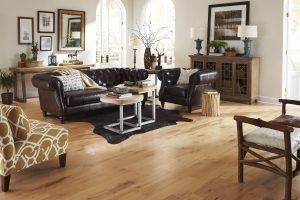
1. Use Area Rugs with Thick Pads
Why It Works
Hardwood floors don’t absorb sound, which causes noise to bounce around. Area rugs with thick, dense pads help soak up sound from footsteps, voices, and furniture movement.
How to Do It
- Choose large rugs that cover key areas like the center of the room and near furniture.
- Add a quality rug pad underneath—preferably made of felt or memory foam.
- The thicker the pad, the better the noise reduction.
2. Install Fabric Wall Panels or Curtains
Why It Works
Walls can reflect noise just like floors. Soft materials like fabric panels and curtains help reduce this echo.
How to Do It
- Hang thick, sound-absorbing curtains over windows or even walls.
- Install ready-made acoustic panels or use DIY options with fabric and foam.
- For best results, cover multiple walls or large wall sections.
3. Add Furniture to Absorb Sound
Why It Works
Empty rooms with hardwood floors echo more. Upholstered furniture and bookshelves absorb sound and reduce the bouncing effect.
How to Do It
- Use sofas, cushioned chairs, and fabric-covered ottomans.
- Place bookshelves or storage units against bare walls.
- Avoid leaving wide, open spaces without any furnishings.
Each of these solutions is affordable, easy to apply, and doesn’t require any permanent changes to your hardwood floors. Together, they create a quieter, more comfortable space.
Our team here at Signature Hardwood Floors is here to help you with any sound reduction questions you might have. Contact us for any hardwood floor questions, and a FREE ESTIMATE. You can call us at 410.415.0755 or click here today! You can also follow us on Facebook, Twitter, and LinkedIn!
